When it comes to cooking, baking, or measuring liquids, knowing exactly how many ounces are in a gallon can save you from costly mistakes.
Surprisingly, the answer isn’t always straightforward—especially if you’re dealing with US and UK measurements.
A gallon in the United States holds a different volume than a UK (Imperial) gallon, which can lead to confusion when following recipes, buying beverages, or handling large quantities of liquid.
In this guide, we’ll break down everything you need to know about gallons and ounces. You’ll learn the exact number of ounces in a US gallon and a UK gallon, discover easy conversion tips, and see practical examples for everyday use.
By the end, you’ll have all the tools to convert gallons to ounces accurately—no calculator required!
Quick Reply: How Many Ounces in a Gallon?
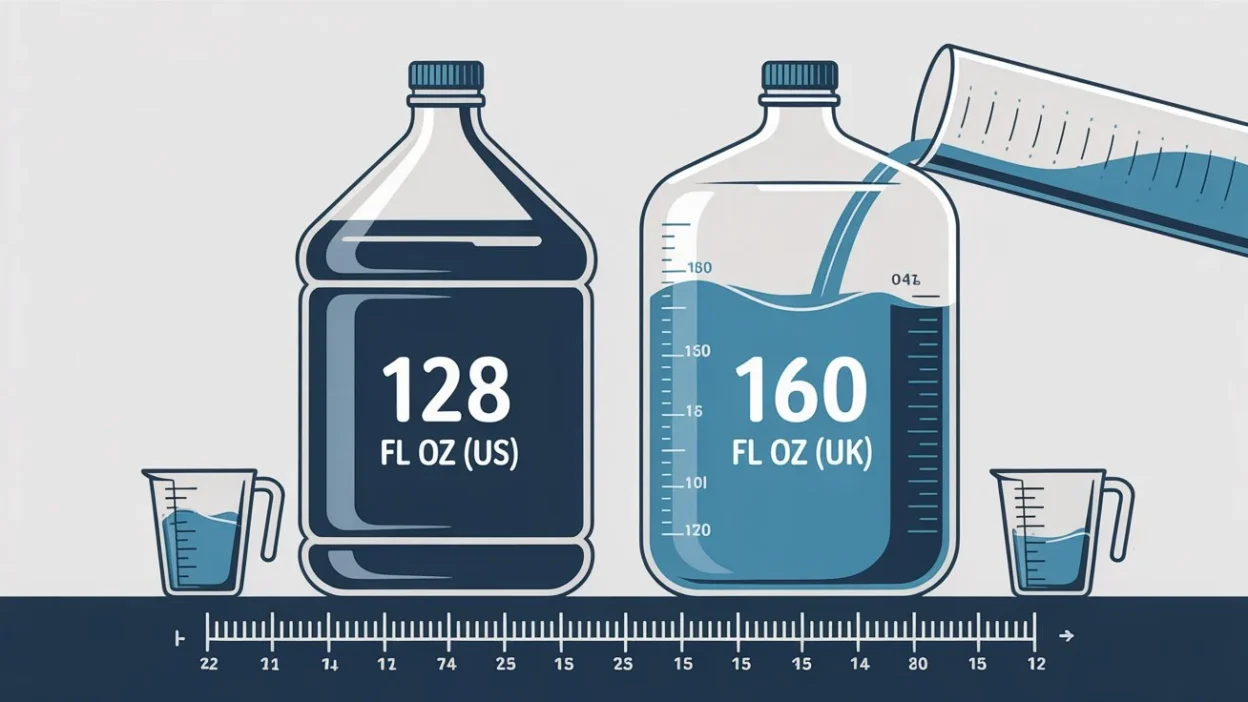
- 1 US gallon = 128 fluid ounces
- 1 UK (Imperial) gallon = 160 fluid ounces
A US gallon is smaller than a UK gallon, so always check which measurement system is being used before converting. Gallons are commonly used for liquids like water, milk, fuel, and beverages, while ounces help measure smaller volumes.
What Is a Gallon? Understanding US and UK Gallons
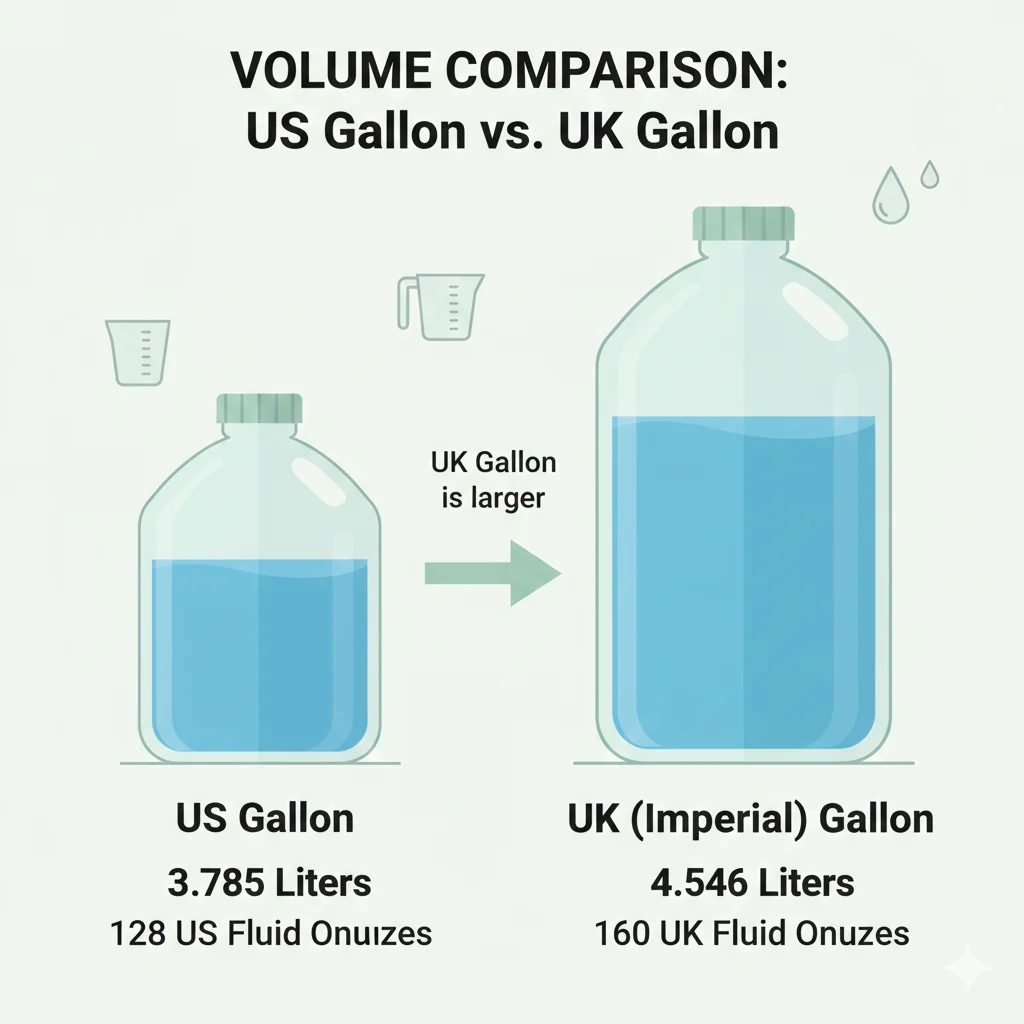
A gallon is a unit of volume commonly used to measure liquids such as water, milk, juice, and even fuel. While it may seem simple, not all gallons are created equal. There are two main types: the US gallon and the UK (Imperial) gallon, and each has a different volume.
The US gallon is widely used in the United States for recipes, beverages, and fuel. It is defined as 128 US fluid ounces or approximately 3.785 liters. On the other hand, the UK gallon, also known as the Imperial gallon, is primarily used in the United Kingdom and some Commonwealth countries. It equals 160 UK fluid ounces or roughly 4.546 liters.
The difference between the two can cause confusion when converting recipes or buying liquids internationally. For example, if a UK recipe calls for 1 gallon of milk, using a US gallon would provide less liquid, potentially affecting the outcome.
Gallons are also divided into smaller units such as quarts, pints, and cups, making conversions easier once you understand the basics. Understanding the distinction between US and UK gallons is the first step toward accurate liquid measurement.
How Many Ounces Are in a US Gallon?
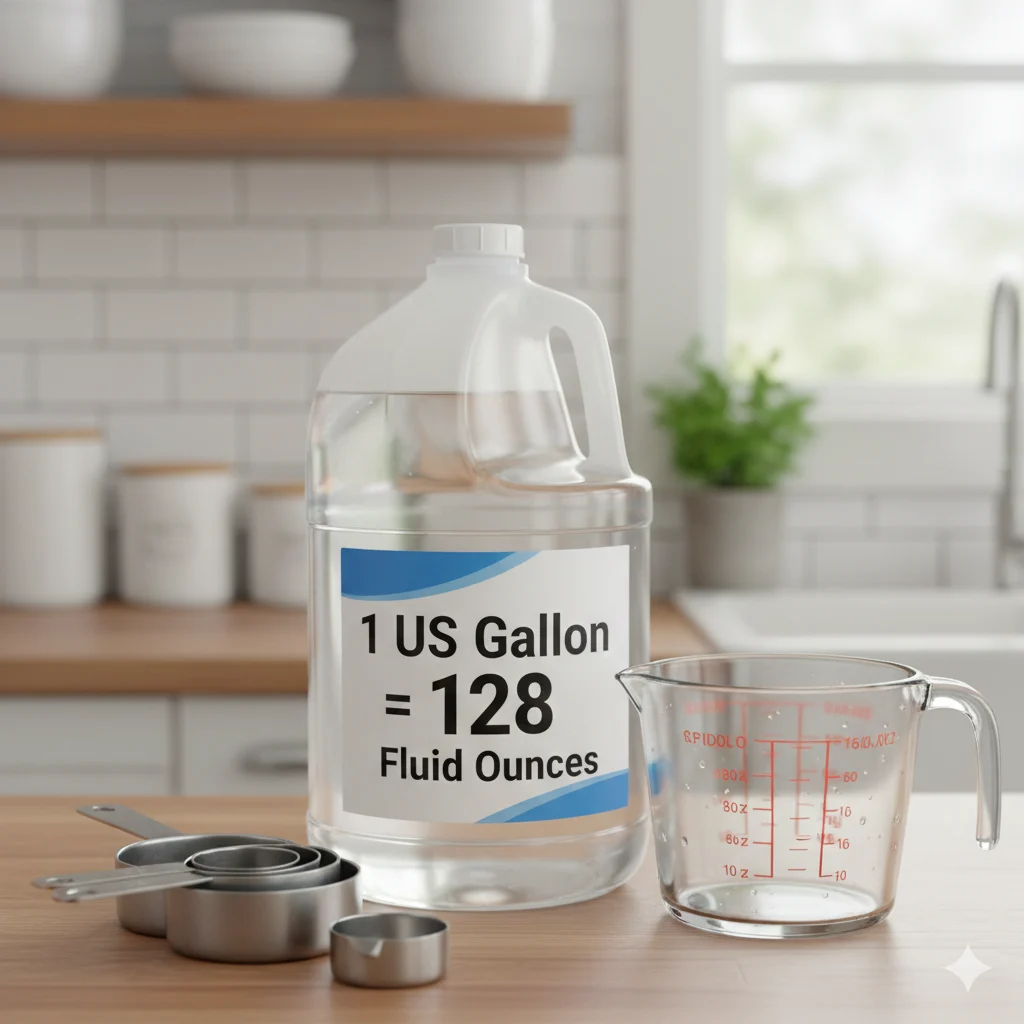
If you’re using US measurements, knowing the exact number of ounces in a gallon is essential for cooking, baking, and everyday liquid conversions. A US gallon contains 128 US fluid ounces, making it easy to break down into smaller units for practical use.
Here’s a quick breakdown:
- 1 US gallon = 4 quarts
- 1 US gallon = 8 pints
- 1 US gallon = 16 cups
- 1 US gallon = 128 fluid ounces
For example, if a recipe calls for 2 gallons of milk, you would need 256 ounces (2 × 128). Similarly, 0.5 gallons equals 64 ounces, making it easy to scale recipes up or down.
US fluid ounces are slightly larger than UK fluid ounces, so it’s important to know which measurement system your recipe or product uses. This is particularly helpful when following international recipes or purchasing beverages and liquid ingredients from other countries.
For quick conversions, you can also use a simple formula:
Ounces = Gallons × 128
By understanding how many ounces are in a US gallon, you’ll never have to guess when measuring liquids, and you can confidently convert recipes or quantities with ease.
How Many Ounces Are in a UK (Imperial) Gallon?
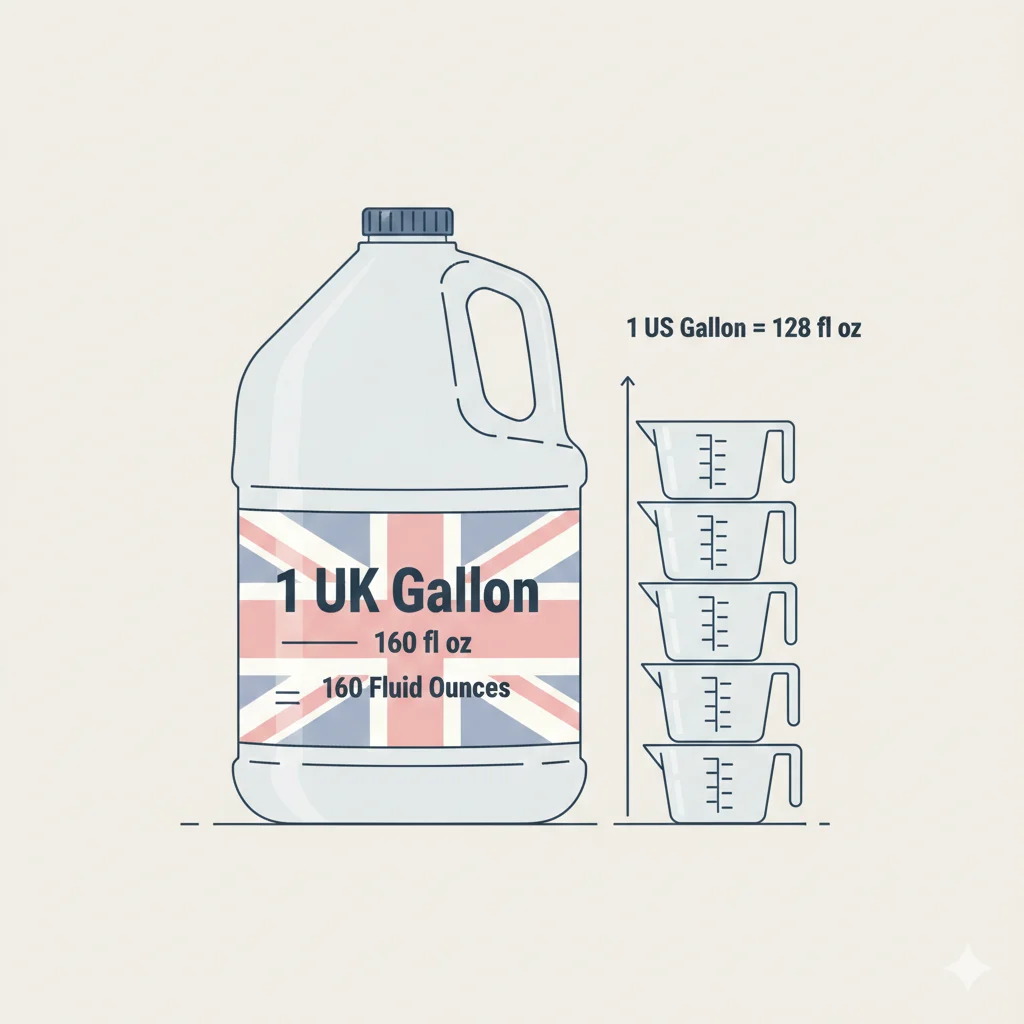
In the United Kingdom and some Commonwealth countries, the Imperial gallon is used instead of the US gallon. The UK gallon is larger than the US gallon, containing 160 UK fluid ounces, which is roughly 4.546 liters. Understanding this difference is crucial when following UK recipes or converting measurements for international use.
Here’s the breakdown of an Imperial gallon:
- 1 UK gallon = 4 quarts
- 1 UK gallon = 8 pints
- 1 UK gallon = 32 gills
- 1 UK gallon = 160 fluid ounces
For instance, if a UK recipe calls for 1 gallon of milk, that equals 160 ounces, which is 32 ounces more than a US gallon. Using a US gallon instead could affect the consistency or outcome of your recipe.
To convert UK gallons to ounces quickly, you can use the formula:
Ounces = Gallons × 160
The Imperial system also measures fluid differently, so UK fluid ounces are slightly smaller than US fluid ounces—1 UK fl oz ≈ 28.41 ml, compared to 1 US fl oz ≈ 29.57 ml.
By knowing how many ounces are in a UK gallon, you can confidently convert recipes, pour beverages, or measure liquids for projects without confusion. Always check whether your recipe or product specifies US or UK measurements to avoid errors.
US vs UK Gallons – Key Differences
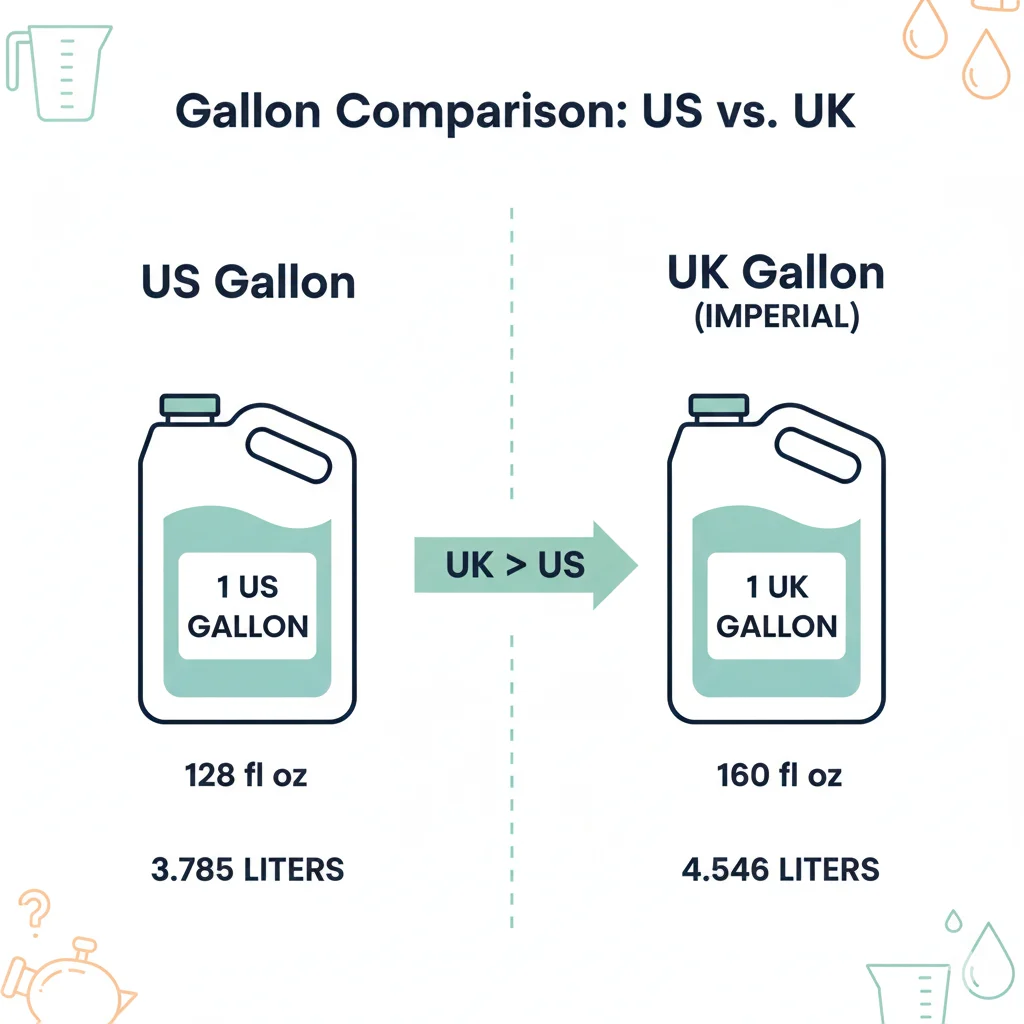
Understanding the difference between US and UK gallons is essential to avoid measurement mistakes, especially in cooking, baking, or buying liquids internationally. Although both are called “gallons,” their volumes are not the same.
The US gallon contains 128 US fluid ounces (≈3.785 liters), while the UK (Imperial) gallon contains 160 UK fluid ounces (≈4.546 liters). That means a UK gallon is about 26% larger than a US gallon. If you accidentally use a US gallon in place of a UK gallon, your recipe or liquid measurement could be significantly off.
Here’s a quick comparison:
| Measurement | US Gallon | UK Gallon |
| Fluid Ounces | 128 fl oz | 160 fl oz |
| Liters | 3.785 L | 4.546 L |
| Quarts | 4 | 4 |
| Pints | 8 | 8 |
| Cups | 16 | 20 (approx.) |
The difference is particularly important when converting recipes from UK cookbooks or purchasing beverages from other countries. Always check whether the gallon measurement is US or Imperial before making conversions.
By keeping this key distinction in mind, you can ensure accurate measurements, avoid recipe disasters, and confidently work with both US and UK liquid units.
Converting Gallons to Other Units
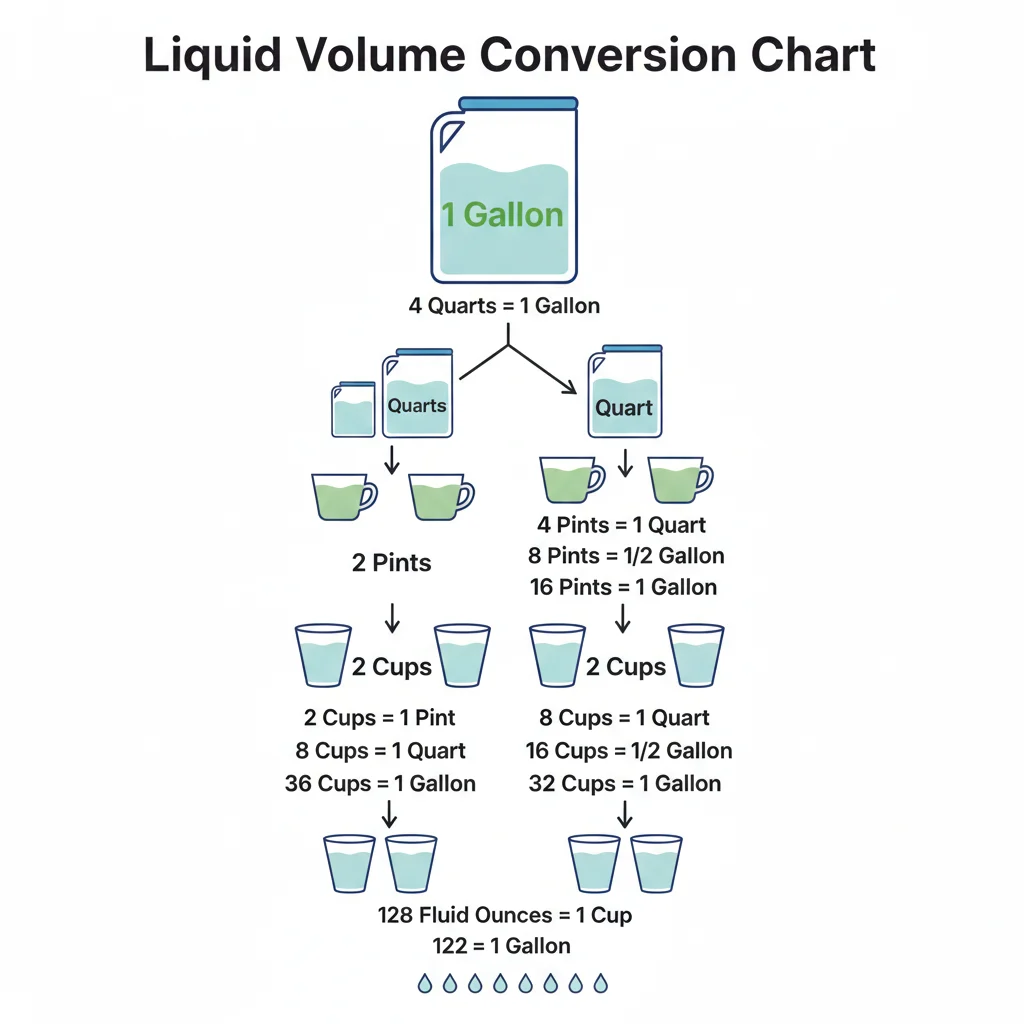
Converting gallons into smaller units like quarts, pints, cups, or ounces can make measuring liquids much easier, especially in cooking, baking, or everyday tasks. Both US and UK gallons can be broken down into these smaller units, but the exact numbers differ slightly depending on the measurement system.
For US gallons:
- 1 gallon = 4 quarts
- 1 gallon = 8 pints
- 1 gallon = 16 cups
- 1 gallon = 128 US fluid ounces
For UK (Imperial) gallons:
- 1 gallon = 4 quarts
- 1 gallon = 8 pints
- 1 gallon = 32 gills
- 1 gallon = 160 UK fluid ounces
Here’s a practical example: if you have 2 US gallons of water, that equals 8 quarts, 16 pints, 32 cups, or 256 ounces. For 2 UK gallons, it equals 8 quarts, 16 pints, 64 gills, or 320 ounces.
Using a simple formula can help:
- US ounces = gallons × 128
- UK ounces = gallons × 160
Understanding these conversions is particularly helpful when scaling recipes, preparing large batches of drinks, or converting measurements from one system to another. A quick reference table can save time and prevent errors in your calculations.
Quick Conversion Tips & Tricks
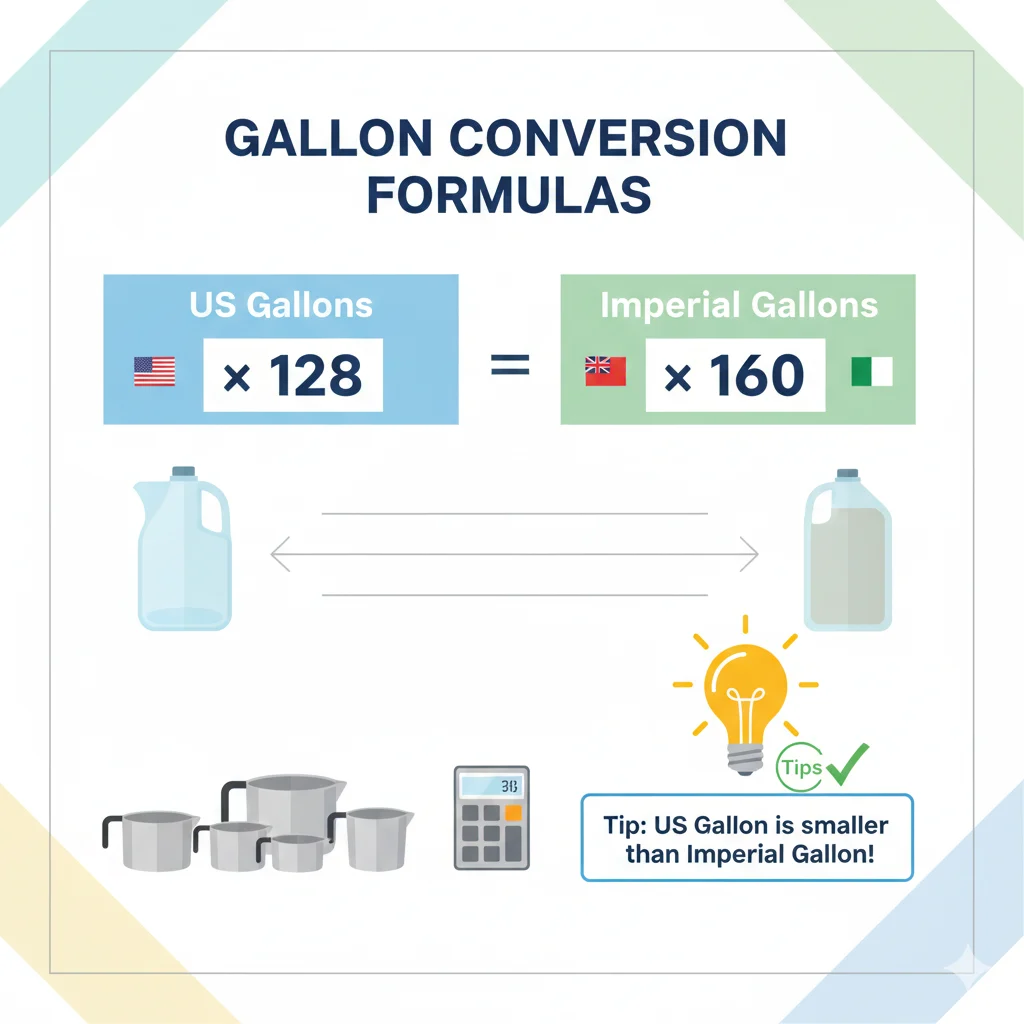
Converting gallons to ounces doesn’t have to be complicated. With a few simple tips and tricks, you can quickly calculate measurements without a calculator, whether you’re cooking, baking, or measuring liquids for other purposes.
The easiest method is to remember the basic formulas:
- US ounces = gallons × 128
- UK ounces = gallons × 160
For example, 0.5 US gallons equals 64 ounces (0.5 × 128), and 0.5 UK gallons equals 80 ounces (0.5 × 160).
Another trick is to break gallons into smaller units first. Since 1 US gallon = 16 cups, you can multiply the number of gallons by 16 to get cups, then convert cups to ounces (1 cup = 8 ounces). This method works well for recipes.
When working with UK gallons, remember they contain more fluid ounces than US gallons. Using the 160-ounce formula or converting first to pints (1 UK gallon = 8 pints) can make calculations easier.
Finally, a mental shortcut:
- 1 US gallon ≈ 4 quarts → 32 cups → 128 ounces
- 1 UK gallon ≈ 5 liters → 160 ounces
By practicing these tips, you can quickly estimate quantities, scale recipes, and avoid mistakes without relying on online converters.
Common Mistakes to Avoid When Converting Gallons to Ounces
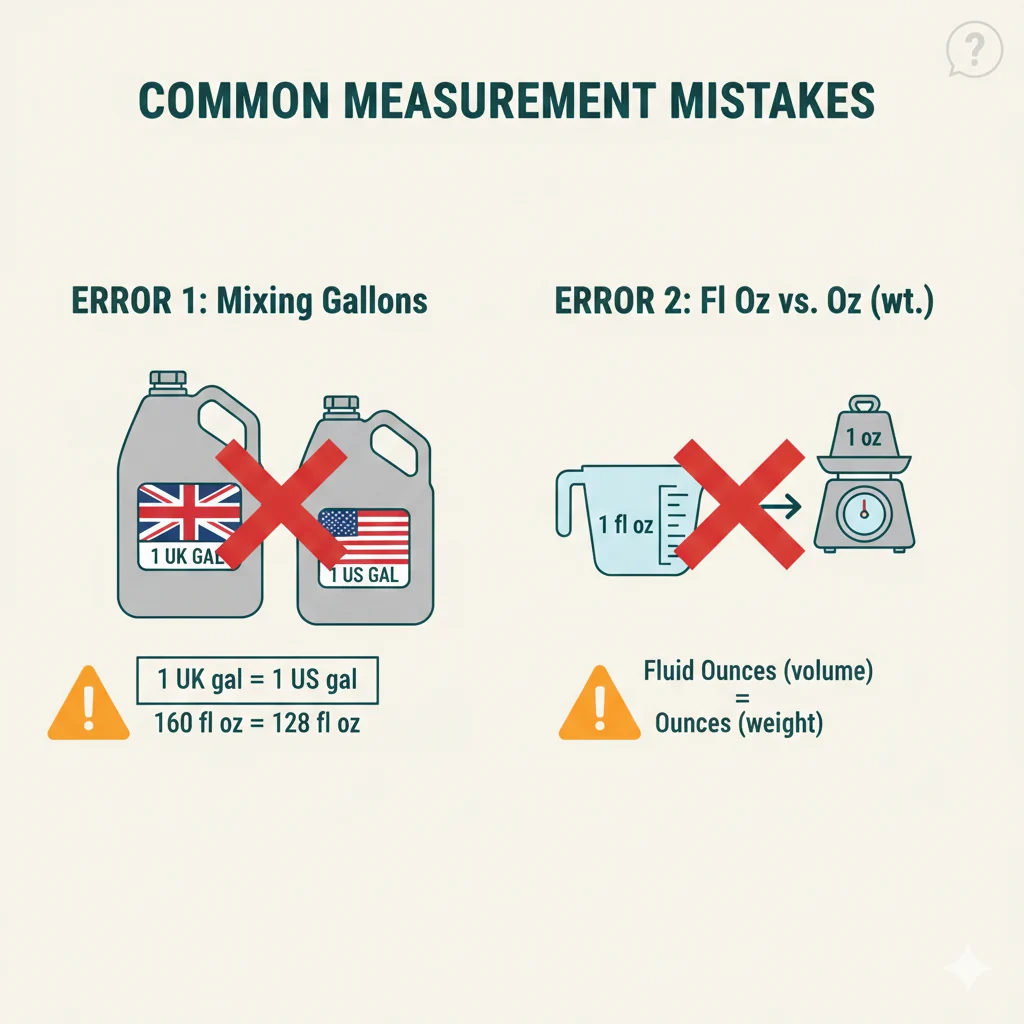
Converting gallons to ounces might seem straightforward, but there are several common mistakes that can lead to errors in recipes, beverages, or other liquid measurements. Being aware of these pitfalls can save time, money, and frustration.
1. Confusing US and UK Gallons:
One of the most frequent mistakes is assuming that a gallon is the same everywhere. A US gallon equals 128 ounces, while a UK (Imperial) gallon equals 160 ounces. Using the wrong gallon measurement can significantly alter quantities, especially in large-scale recipes.
2. Using Fluid Ounces vs. Ounces by Weight:
Fluid ounces measure volume, not weight. People often confuse them with ounces by weight, which can result in inaccurate measurements when ingredients are dense or heavy. Always use fluid ounces when converting gallons.
3. Forgetting Smaller Unit Conversions:
Not converting gallons properly into quarts, pints, or cups can cause errors. For example, 1 US gallon = 16 cups, not 12 or 20.
4. Ignoring Fractions of a Gallon:
Half gallons, quarter gallons, or other fractions must be multiplied correctly (e.g., 0.5 US gallon = 64 ounces).
By avoiding these mistakes and following simple formulas, you can confidently convert gallons to ounces in both US and UK systems, ensuring accurate measurements every time.
Frequently Asked Questions (FAQs) About Gallons and Ounces
When converting gallons to ounces, many people have similar questions. Here are some of the most frequently asked questions to help you understand and measure liquids accurately.
1. How many cups are in a gallon?
- In the US system, 1 gallon = 16 cups.
- In the UK system, 1 Imperial gallon ≈ 20 cups.
2. How many quarts are in a gallon?
- Both US and UK gallons contain 4 quarts. This makes quarts an easy starting point for conversions.
3. How many liters are in a gallon?
- 1 US gallon ≈ 3.785 liters
- 1 UK gallon ≈ 4.546 liters
4. Is a gallon the same in the US and UK?
No, a US gallon is smaller (128 oz) than a UK gallon (160 oz). Always check the measurement system before converting.
5. How many ounces are in half a gallon?
- US half-gallon = 64 ounces
- UK half-gallon = 80 ounces
6. Can I use US measurements in UK recipes?
You can, but you’ll need to adjust the quantities to match the correct volume to avoid errors.
These FAQs cover the most common questions and help ensure accurate liquid measurement, whether you’re cooking, baking, or handling large quantities.
Practical Applications of Gallon to Ounce Conversion
Understanding how many ounces are in a gallon is not just a math exercise—it has real-world applications in daily life. Whether you’re cooking, baking, or measuring liquids for home or professional use, accurate conversions ensure consistency and avoid mistakes.
1. Cooking and Baking: Recipes often call for large quantities of liquid, such as milk, water, or oil. Knowing that 1 US gallon equals 128 ounces helps you scale recipes up or down without guesswork. For UK recipes, remembering 1 gallon = 160 ounces prevents under- or over-measuring ingredients.
2. Beverages: When buying drinks in bulk, like soda, juice, or milk, knowing the exact number of ounces in a gallon helps track servings and portion sizes. For instance, a 2-gallon container of juice in the US equals 256 ounces, which is 32 eight-ounce servings.
3. Fuel and Automotive Fluids: Gallons are commonly used to measure fuel, antifreeze, or other automotive liquids. Converting to ounces can help you measure small amounts for refills or DIY projects.
4. DIY and Home Projects: Whether mixing cleaning solutions, paint, or other liquids, precise measurements matter. Converting gallons to ounces ensures you get the right ratios every time.
By mastering gallon-to-ounce conversions, you can handle liquids accurately in multiple contexts, saving time, money, and reducing errors.
Conclusion: How Many Ounces Are in a Gallon?
Understanding how many ounces are in a gallon is a simple yet essential skill that can make everyday tasks much easier. Whether you’re following a recipe, measuring beverages, or working on a DIY project, accurate liquid measurements help you avoid costly mistakes.
The key takeaway is straightforward: 1 US gallon equals 128 fluid ounces, while 1 UK (Imperial) gallon equals 160 fluid ounces.
The difference between US and UK gallons may seem small, but it can have a big impact, especially when dealing with large quantities or precise recipes. That’s why it’s always important to check which measurement system is being used before converting.
Remembering a few basic formulas, such as gallons × 128 for US ounces and gallons × 160 for UK ounces, can save you time and confusion.
By learning these conversions and understanding how gallons relate to quarts, pints, cups, and liters, you can confidently handle any liquid measurement.
Bookmark this guide or save a conversion chart for quick reference whenever you need it. With these tips, converting gallons to ounces becomes quick, accurate, and stress-free.