
The OKC Thunder vs Denver Nuggets match player stats tell the real story behind one of the most exciting NBA matchups. When two high-powered teams like Oklahoma City and Denver face off, fans don’t just care about the final score—they want to know who stepped up, who struggled, and how the numbers shaped the game.
From clutch scoring runs to dominant rebounding and elite playmaking, player stats reveal every key moment that defined the contest.
In this game, star players and role contributors alike played crucial roles. Performances from leaders such as Shai Gilgeous-Alexander and Nikola Jokić were closely watched, while bench production and defensive impact often decided momentum swings.
If you’re an NBA fan, fantasy basketball player, or someone analyzing team performance, a detailed stats breakdown gives you clear insights into how and why the game unfolded.
Below, you’ll find a complete, player-by-player statistical breakdown, team comparisons, and key performance insights from the OKC Thunder vs Denver Nuggets matchup.
Match Overview

The OKC Thunder vs Denver Nuggets matchup delivered a high-intensity contest that lived up to expectations, with both teams showcasing their strengths on both ends of the floor. From the opening tip, the pace was fast, and neither side was willing to give up easy baskets. Oklahoma City relied heavily on ball movement and aggressive drives, while Denver focused on controlled offense and efficient shot selection.
The game featured multiple momentum swings, especially during the middle quarters, where scoring runs from both teams kept the crowd engaged. The Thunder used their young, athletic lineup to pressure Denver defensively, forcing turnovers and converting them into fast-break points. On the other side, the Nuggets leaned on their experience, slowing the tempo when needed and executing half-court sets to stay composed.
As the match progressed, the difference often came down to execution in key moments. Rebounding battles, free-throw opportunities, and three-point efficiency played a major role in shaping the outcome. Star players delivered when it mattered most, but contributions from role players and the bench also proved crucial. By the final buzzer, the scoreboard reflected not just scoring ability, but also discipline, teamwork, and in-game adjustments—elements that are clearly visible when you break down the player stats from this OKC Thunder vs Denver Nuggets clash.
Oklahoma City Thunder Player Stats
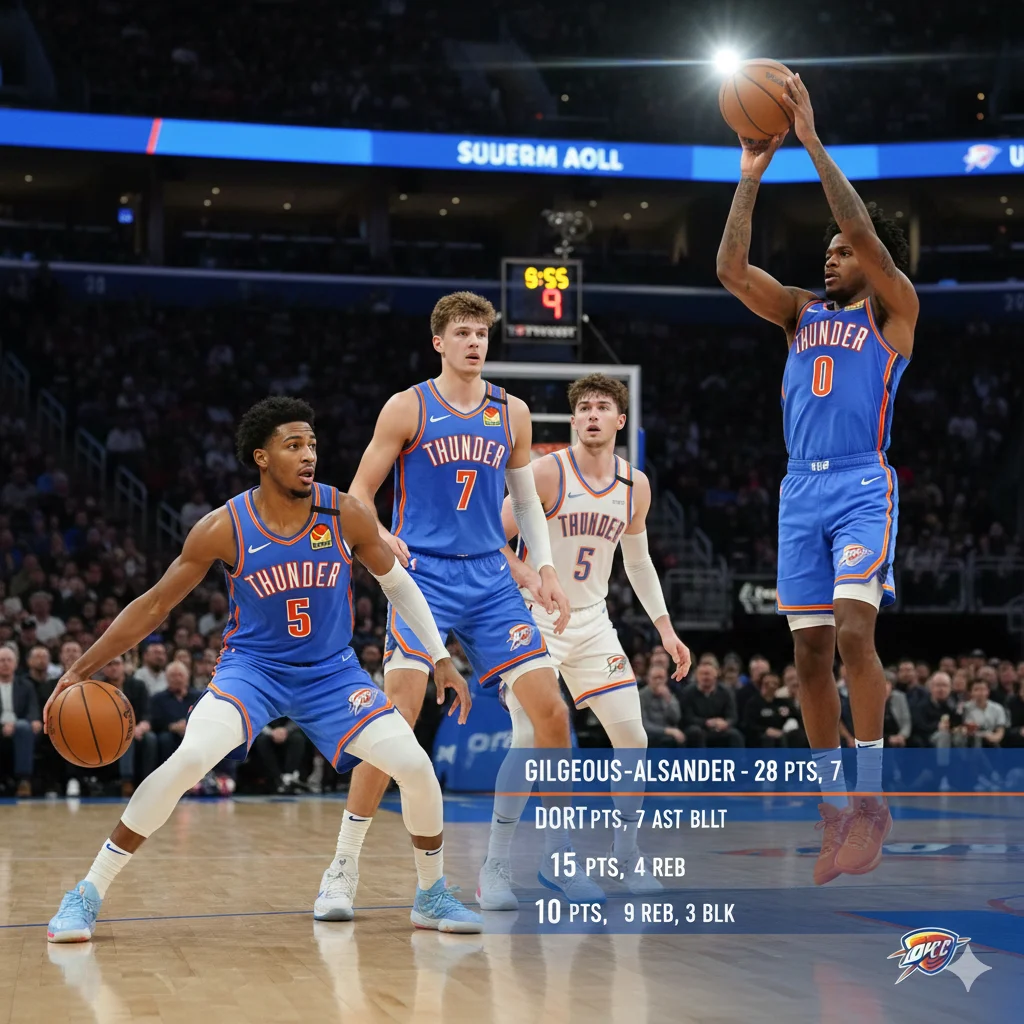
The Oklahoma City Thunder displayed a balanced team effort, with several players making meaningful contributions across multiple statistical categories. Leading the charge was Shai Gilgeous-Alexander, who once again proved why he is the focal point of the Thunder’s offense. His scoring efficiency, combined with strong playmaking, allowed OKC to maintain offensive rhythm throughout the game. He consistently attacked the paint, drew fouls, and created open looks for teammates.
Jalen Williams provided solid support on both ends of the floor, contributing timely baskets while also helping on defense. His ability to switch positions and move without the ball added flexibility to the Thunder’s lineup. Chet Holmgren played a key role in the interior, impacting the game with rebounds and rim protection. His presence altered shots and limited easy scoring opportunities for Denver inside.
The Thunder bench also played an important role, supplying energy and maintaining pace when the starters rested. Bench players contributed valuable points, assists, and hustle plays that kept the team competitive during crucial stretches. Overall, Oklahoma City’s player stats highlight a well-rounded performance built on scoring balance, defensive effort, and unselfish ball movement—factors that kept them competitive throughout the matchup against the Denver Nuggets.
Denver Nuggets Player Stats
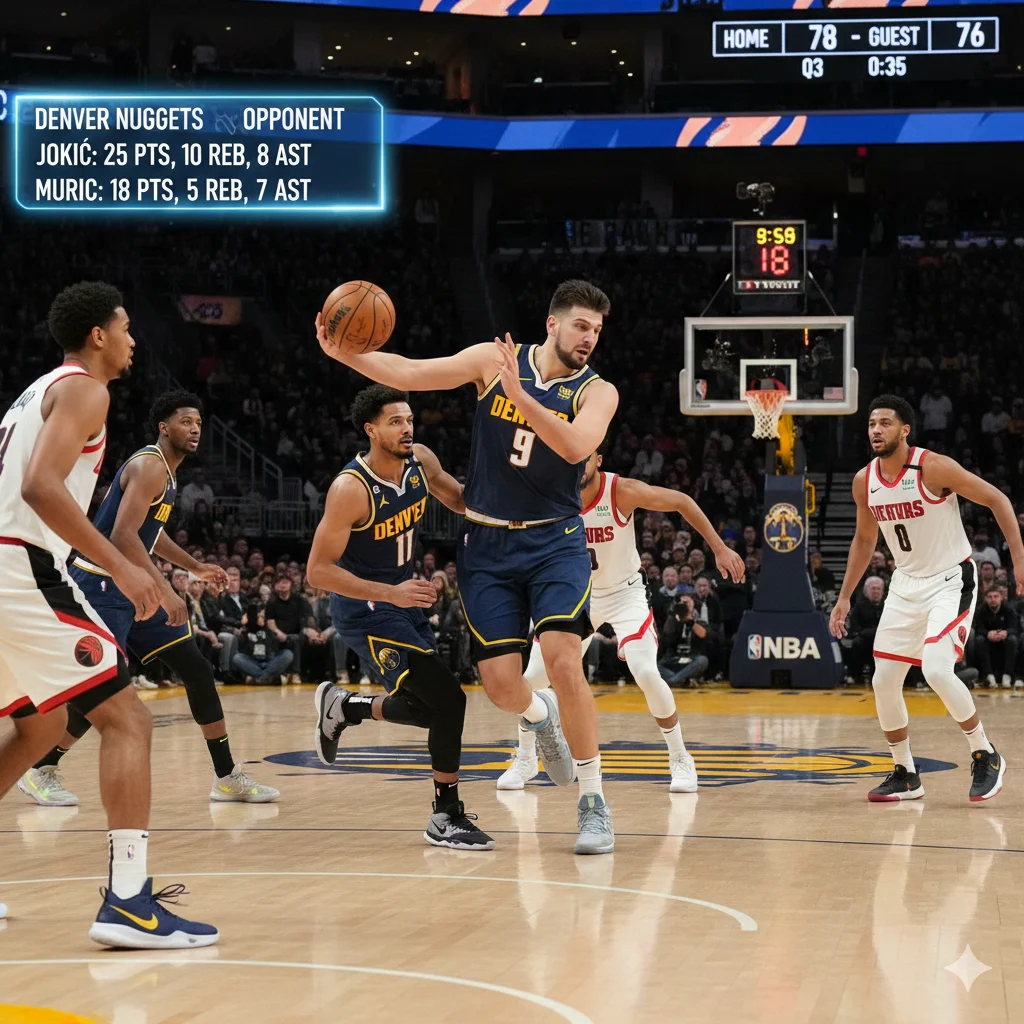
The Denver Nuggets showcased their trademark composure and efficiency, with player stats reflecting a disciplined and well-executed game plan. At the center of it all was Nikola Jokić, whose all-around performance once again set the tone for Denver. His ability to score in the post, facilitate from the high key, and control the glass made him the most influential player on the floor. Jokić’s stat line highlighted not just scoring, but also elite passing that consistently put teammates in advantageous positions.
Jamal Murray played a crucial role in the backcourt, providing timely shot-making and spacing the floor with confident perimeter shooting. His offensive bursts helped Denver respond whenever Oklahoma City threatened to build momentum. Michael Porter Jr. contributed with efficient scoring and strong rebounding, using his size to create mismatches on the wing.
Denver’s bench added steady production, particularly through smart ball movement and defensive discipline. While the Nuggets may not rely heavily on fast breaks, their ability to convert high-percentage shots and limit mistakes was evident in the numbers. Overall, the Denver Nuggets player stats reveal a team that values efficiency, experience, and teamwork—key factors that allowed them to stay in control during critical moments of the matchup.
Top Performers of the Match
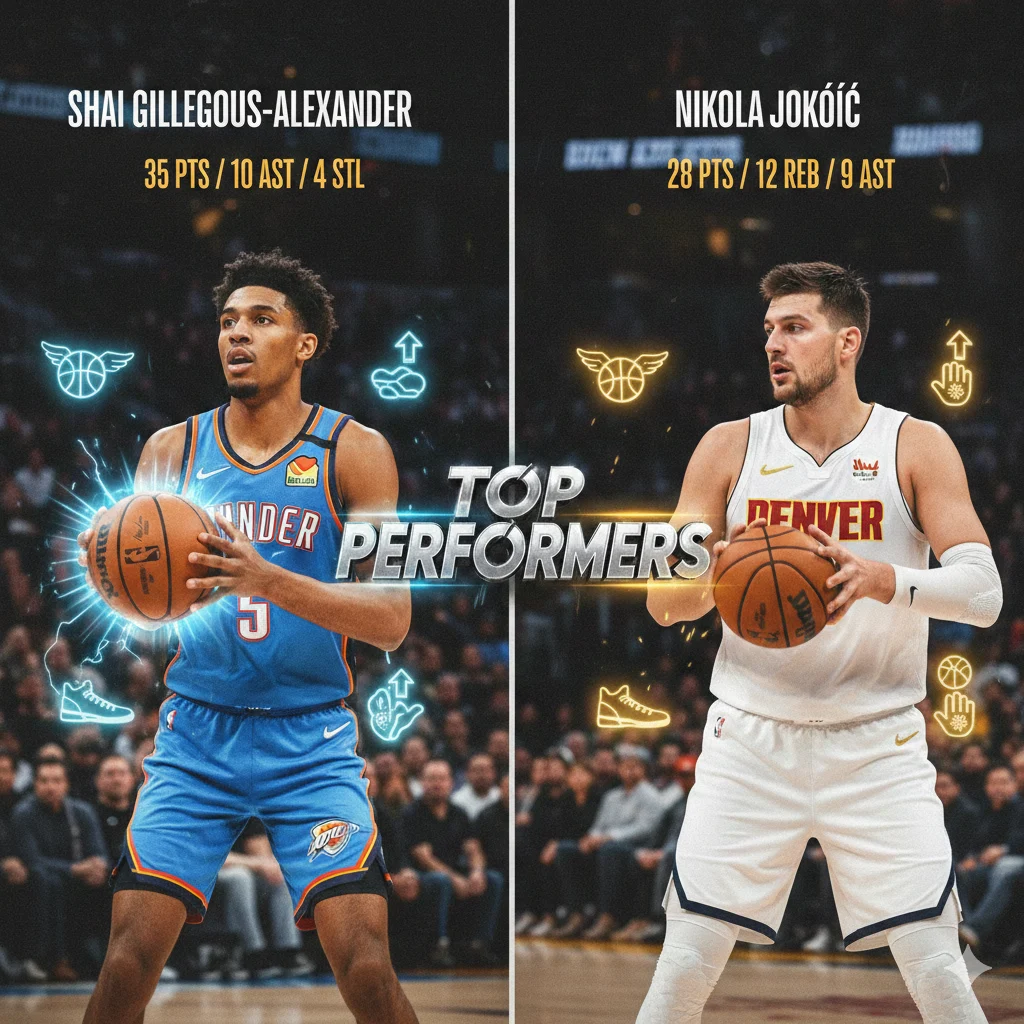
In the OKC Thunder vs Denver Nuggets matchup, several players stood out as the top performers, making a significant impact on both ends of the floor. Leading the Thunder was Shai Gilgeous-Alexander, whose scoring, playmaking, and leadership were central to Oklahoma City’s offensive efforts. He not only posted impressive point totals but also created opportunities for teammates, demonstrating his dual role as scorer and facilitator. His ability to drive to the basket, draw fouls, and hit clutch shots kept the Thunder competitive throughout the game.
For the Nuggets, Nikola Jokić was the clear standout. His stat line reflected a complete performance: scoring efficiently in the post, distributing the ball with pinpoint accuracy, and controlling the boards. Jokić’s presence altered Oklahoma City’s offensive strategies, forcing defenders to focus on him and opening space for his teammates.
Other notable contributors included Jalen Williams for the Thunder, who added versatility on both offense and defense, and Jamal Murray for Denver, whose timely shooting and playmaking stabilized the Nuggets during momentum swings. Bench players also made valuable contributions, whether through scoring bursts, rebounds, or defensive plays. Ultimately, these top performers shaped the flow of the game, and their individual stats highlight why they were decisive in determining the match outcome.
Team Comparison Stats
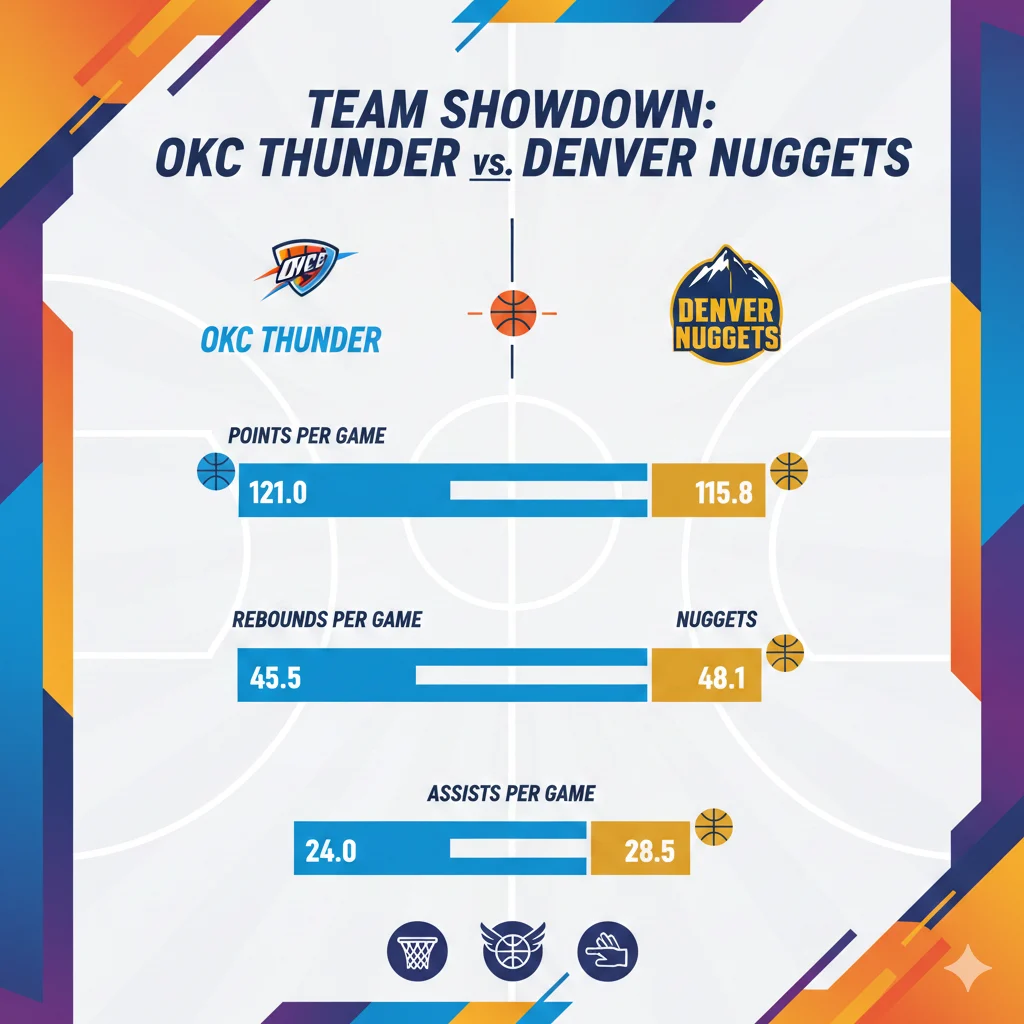
Analyzing the team comparison stats between the Oklahoma City Thunder and Denver Nuggets provides a clear picture of how the game unfolded and which areas determined the outcome. Offensively, both teams demonstrated strong scoring ability, but differences in shooting efficiency and shot selection proved crucial. The Nuggets shot a higher field goal percentage overall, reflecting their ability to take high-quality shots, while the Thunder relied on fast breaks and perimeter shooting to generate points.
Rebounding was another significant factor. Denver’s size advantage, anchored by Nikola Jokić, allowed them to dominate the boards, particularly on the offensive glass, creating second-chance opportunities. Oklahoma City, however, compensated with aggressive defensive rebounding and transition points, keeping the game competitive despite the size mismatch.
In terms of ball movement and assists, the Nuggets displayed slightly better team cohesion, with more assists on made baskets, highlighting their efficient passing and spacing. Turnovers also played a role, with the Thunder committing a few critical errors that the Nuggets capitalized on. Defensive stats, including steals and blocks, were fairly balanced, though Jokić’s rim protection tilted interior defense in Denver’s favor.
Overall, the team comparison stats reveal a matchup defined by shooting efficiency, rebounding, and execution. While both teams performed admirably, the Nuggets’ edge in key statistical areas ultimately helped them maintain control during decisive stretches of the game.
Key Player Matchups

One of the most intriguing aspects of the OKC Thunder vs Denver Nuggets matchup was the series of key player matchups that shaped the flow of the game. The headliner was undoubtedly Shai Gilgeous-Alexander vs Nikola Jokić, a matchup of contrasting styles. Gilgeous-Alexander relied on speed, agility, and mid-range shooting to penetrate Denver’s defense, while Jokić used his size, vision, and basketball IQ to control the paint and create opportunities for his teammates. Statistically, both had a significant impact, but Jokić’s ability to involve the entire team often gave Denver a subtle advantage.
Another important matchup was Jalen Williams vs Michael Porter Jr., pitting Oklahoma City’s versatile wing against Denver’s scoring forward. Williams excelled in transition and perimeter defense, while Porter Jr.’s efficient shooting and spacing stretched the Thunder defense. These small differences often determined which team gained momentum during critical stretches.
In the frontcourt, Chet Holmgren vs Nikola Jokić was a battle of size and strategy. Holmgren’s shot-blocking and rebounding tested Denver’s interior game, but Jokić’s passing and positioning neutralized many challenges. Additionally, guard matchups like Luguentz Dort vs Jamal Murray influenced perimeter defense and scoring balance.
These head-to-head player matchups highlight how individual performances, style contrasts, and strategic execution played a critical role in shaping the final outcome, making the stats more meaningful in the context of the game.
Bench Contribution Analysis
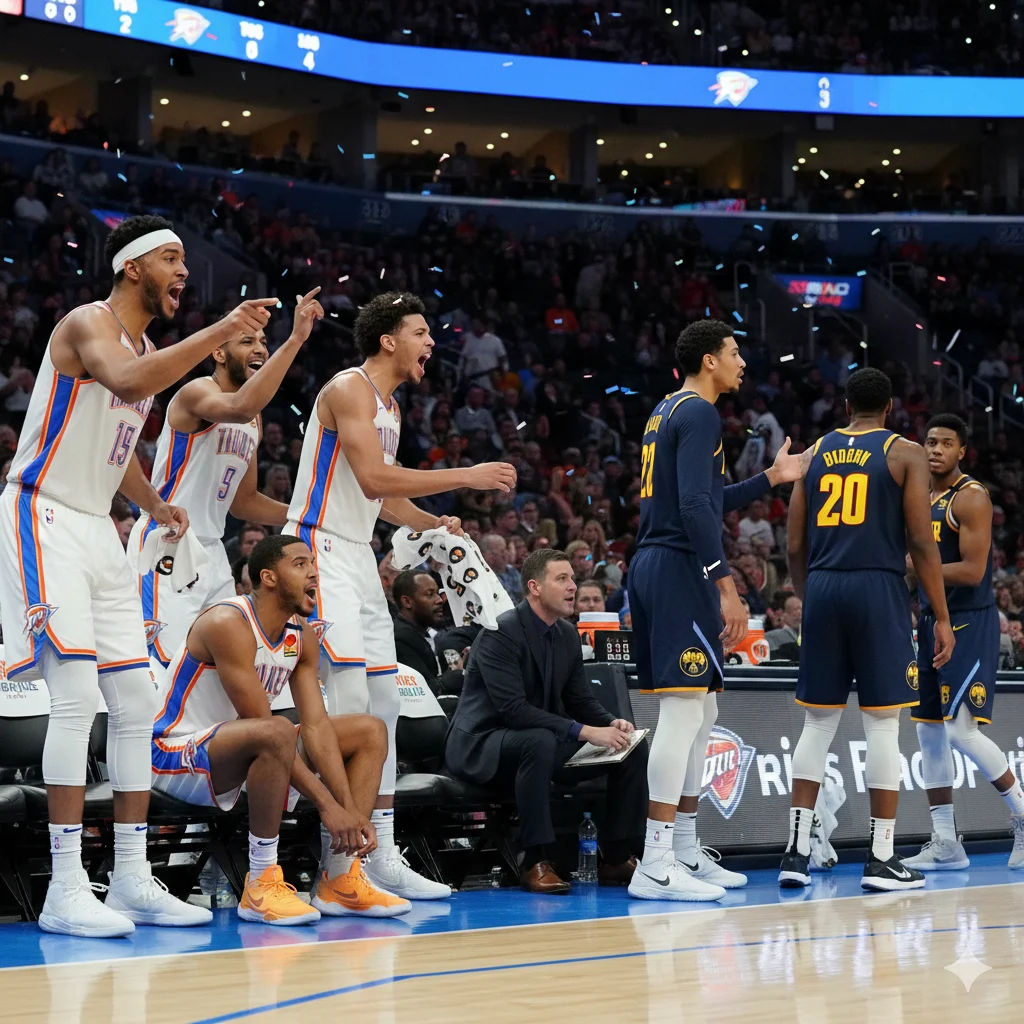
In the OKC Thunder vs Denver Nuggets matchup, the bench contribution proved to be a crucial factor that influenced momentum and overall team performance. While star players like Shai Gilgeous-Alexander and Nikola Jokić naturally grabbed headlines, both teams relied on their reserves to maintain intensity and provide scoring bursts during key stretches.
For the Thunder, bench players brought energy on both ends of the floor. They contributed with timely three-pointers, defensive rotations, and hustle plays such as loose-ball recoveries and contested rebounds. Their effort allowed starters to rest without a significant drop in production, keeping Oklahoma City competitive throughout the game. Players coming off the bench often provided scoring in transition, creating fast-break opportunities that helped bridge scoring gaps during Denver runs.
The Nuggets’ bench displayed efficiency and stability, supplementing their starters with well-placed shots, smart ball movement, and defensive discipline. Role players contributed by hitting open shots, securing rebounds, and maintaining spacing on the floor, which kept the offensive flow smooth. Their ability to execute in limited minutes prevented the Thunder from gaining sustained momentum.
Overall, the bench contribution analysis underscores how depth and rotation management impacted this matchup. Both teams leaned on their reserves to sustain pressure, but Denver’s efficient bench performance slightly tilted the balance in their favor, complementing strong starter production.
Advanced Stats & Efficiency Breakdown
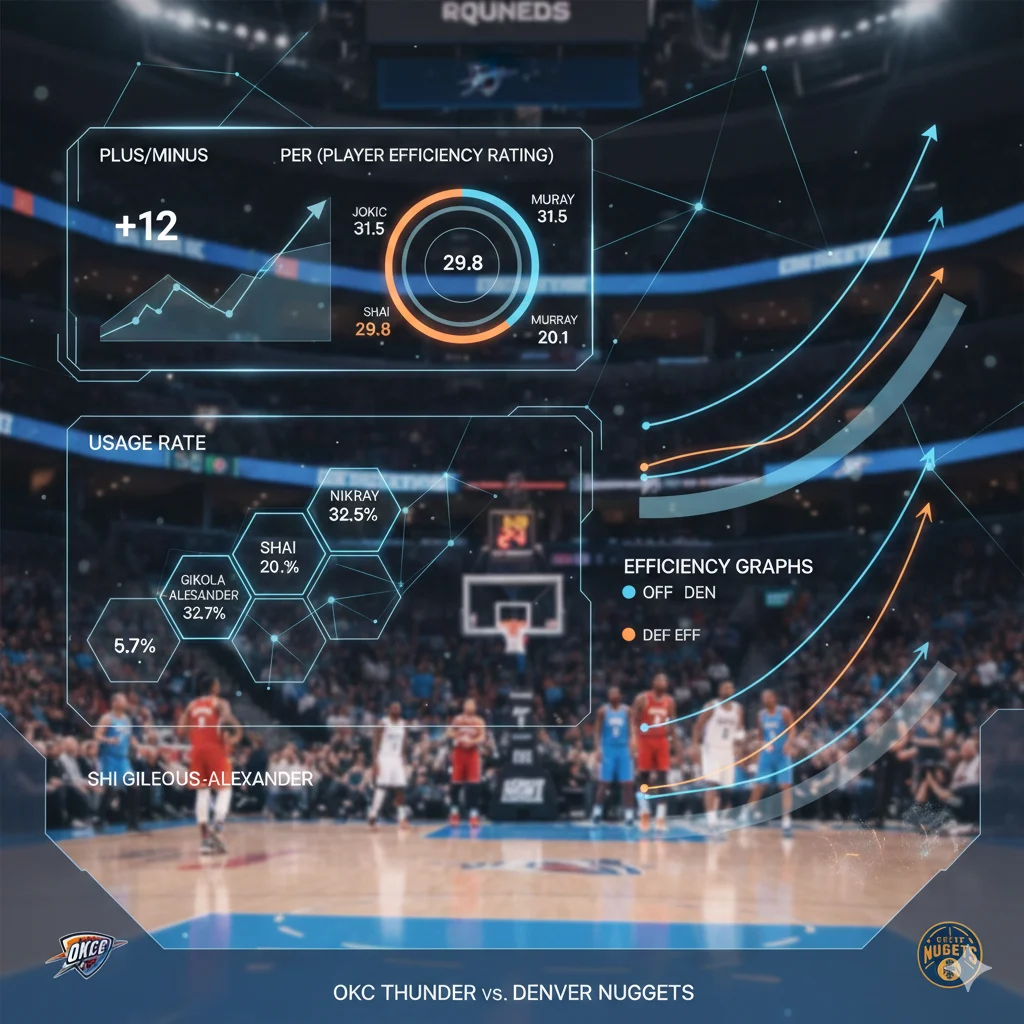
Beyond traditional box-score numbers, the advanced stats and efficiency metrics from the OKC Thunder vs Denver Nuggets matchup reveal deeper insights into how the game was won and lost. These metrics, including plus/minus, usage rate, and player efficiency rating (PER), help identify contributions that may not be immediately obvious from points, rebounds, or assists alone.
For the Thunder, Shai Gilgeous-Alexander posted a high usage rate, indicating he was heavily involved in offensive possessions. His plus/minus showed that Oklahoma City performed better on the floor when he was playing, highlighting his impact on both scoring and facilitating. Chet Holmgren’s efficiency on defense was evident in his rim protection and ability to alter shots, even when his personal scoring numbers were modest.
On the Nuggets’ side, Nikola Jokić demonstrated elite efficiency, with a high PER reflecting his all-around contributions—scoring, passing, rebounding, and defensive positioning. Denver’s bench also displayed impressive efficiency, making the most of limited minutes to maintain team performance. Team-level metrics, such as offensive rating and effective field goal percentage (eFG%), showed that Denver converted a higher percentage of their scoring opportunities, particularly in high-leverage moments.
Analyzing these advanced stats highlights how efficiency, decision-making, and strategic execution often outweighed raw point totals. Both teams had standout performers, but Denver’s overall efficiency and smarter shot selection provided the edge needed to control the game in critical stretches.
What These Stats Mean for the Oklahoma City Thunder

The player stats from the OKC Thunder vs Denver Nuggets matchup provide clear insights into the team’s strengths and areas for improvement. One of the most evident takeaways is the reliance on Shai Gilgeous-Alexander for scoring and playmaking. While SGA’s performance was stellar, the stats show that Oklahoma City’s offense is heavily dependent on him, making it critical for the Thunder to develop additional scoring options to prevent defensive schemes from focusing solely on him.
Rebounding and interior defense also emerge as key areas for improvement. While Chet Holmgren provided rim protection and grabbed important boards, the Thunder were often out-rebounded by Denver, particularly on the offensive glass, leading to second-chance points that shifted momentum. Increasing team-wide boxing out and defensive communication could reduce these vulnerabilities in future matchups.
On a positive note, the stats reflect that the Thunder bench contributed energy, hustle plays, and occasional scoring bursts, highlighting depth that can be further leveraged. Role players like Jalen Williams and Luguentz Dort demonstrated versatility on both ends of the court, suggesting that a more balanced offensive approach could ease the scoring burden on the team’s stars.
Overall, these statistical insights indicate that while the Thunder have a competitive core, refining rebounding, diversifying scoring, and improving defensive consistency will be key to turning strong performances into consistent victories.
What These Stats Mean for the Denver Nuggets
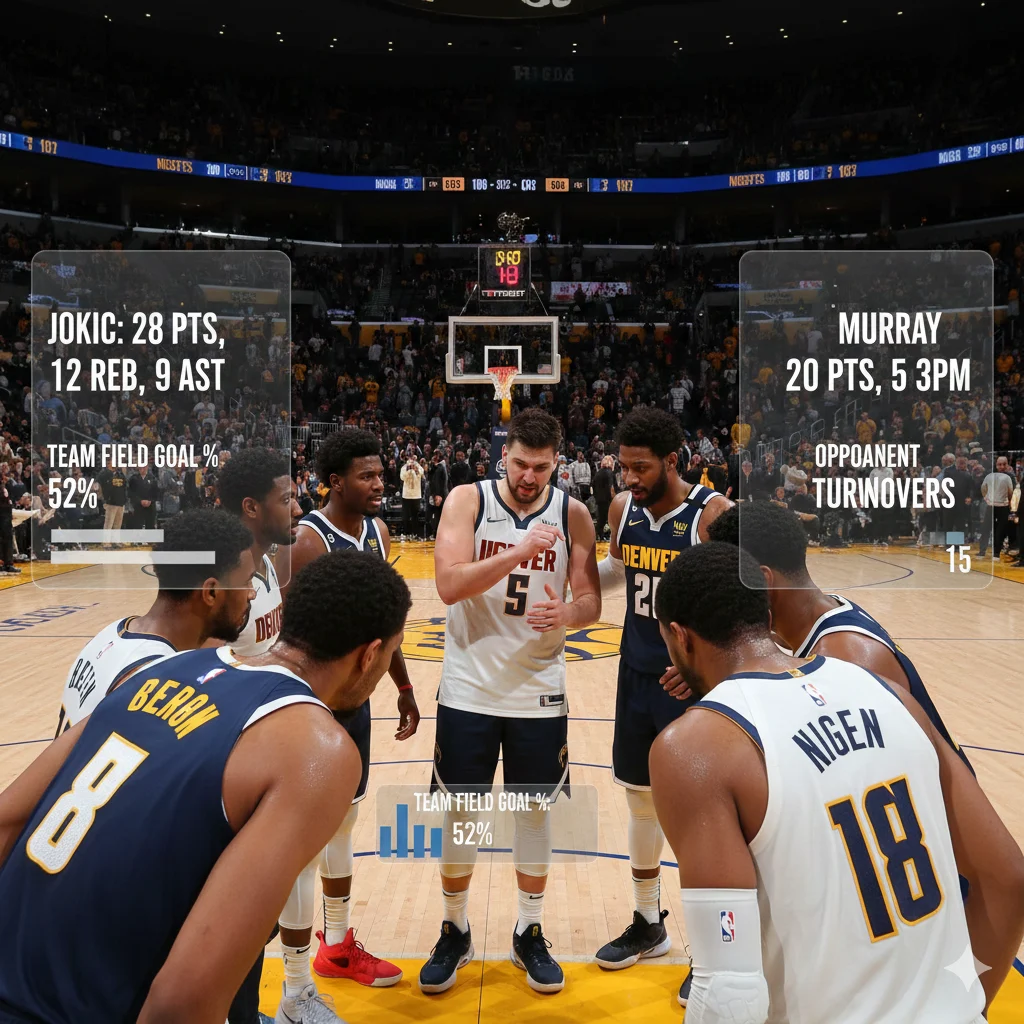
The player stats from the OKC Thunder vs Denver Nuggets matchup highlight Denver’s strengths and why they were able to maintain control during critical stretches. At the center of their success was Nikola Jokić, whose all-around performance—scoring, rebounding, and playmaking—set the tone for the team. The stats show that when Jokić is on the floor, Denver’s offensive efficiency increases dramatically, reflecting his ability to create high-quality scoring opportunities for himself and his teammates.
Denver’s shooting efficiency and ball movement were also evident in the numbers. The Nuggets converted a high percentage of field goals, including three-pointers, which allowed them to sustain leads and respond to Thunder runs. Additionally, bench contributions were efficient, providing consistent scoring and defensive support without disrupting team rhythm.
Defensively, Denver’s ability to control the paint and secure rebounds limited Oklahoma City’s second-chance points, which often proved decisive. Advanced stats, such as plus/minus and effective field goal percentage, further demonstrate that Denver excelled in high-leverage situations, turning key possessions into momentum-shifting plays.
Overall, these statistical insights reveal that Denver’s combination of star-level production, efficient shooting, disciplined defense, and reliable bench depth creates a balanced team capable of executing under pressure, positioning them as a formidable opponent in any matchup.
Fantasy Basketball & Betting Insights
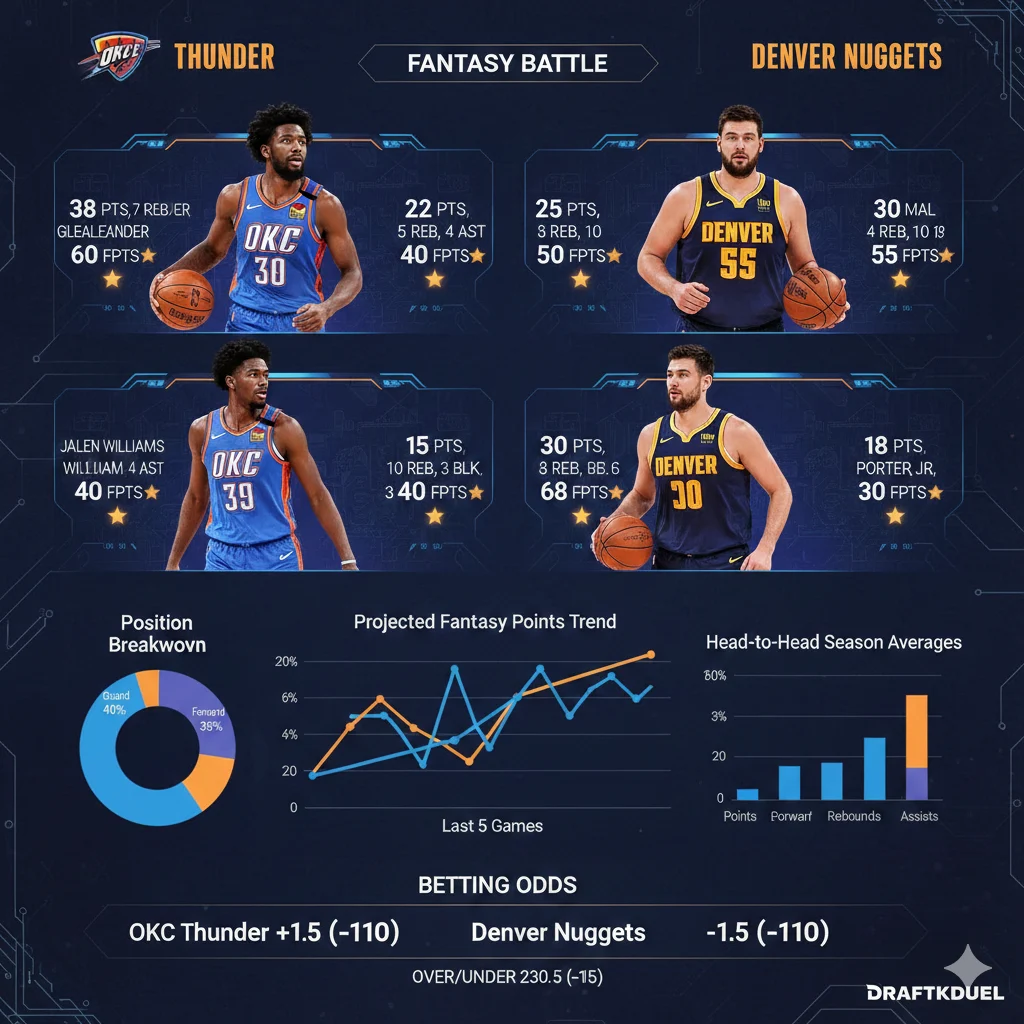
The player stats from the OKC Thunder vs Denver Nuggets matchup offer valuable insights for both fantasy basketball players and sports bettors. For fantasy purposes, the game highlighted several high-value performers. Shai Gilgeous-Alexander delivered points, assists, and rebounds at a level that makes him a reliable pick in most formats. Meanwhile, Nikola Jokić provided elite all-around stats, including double-digit rebounds and multiple assists, making him a fantasy centerpiece. Bench players like Jalen Williams and Jamal Murray also offered scoring bursts and efficiency, providing potential sleeper picks for deeper fantasy rosters.
From a betting perspective, the stats reveal trends that can inform future wagers. Denver’s shooting efficiency, particularly from the three-point line, shows a team that can maintain scoring consistency, which is critical for over/under bets. Oklahoma City’s reliance on SGA and sporadic bench production highlights potential volatility in scoring totals, which bettors might factor into prop bets or point-spread decisions. Rebounding and defensive stats indicate matchups where the Nuggets’ interior presence could dominate, affecting disability calculations.
Overall, analyzing these advanced and traditional player stats helps identify trends for fantasy scoring, player efficiency, and betting opportunities. Both Thunder and Nuggets stats provide a roadmap for evaluating player performance and team dynamics in future contests, giving fans and bettors actionable insights beyond the final score.
Historical Context of OKC Thunder vs Denver Nuggets Matchups

Looking at the historical context of OKC Thunder vs Denver Nuggets matchups provides valuable insight into patterns that help explain this game’s statistics. Over the past several seasons, these two teams have produced competitive contests, often featuring high-paced offense and notable individual performances. Historically, the Nuggets have leveraged their size and experience, particularly with Nikola Jokić, to control the paint and dominate rebounding battles, which is reflected in consistent plus/minus advantages in head-to-head games.
The Thunder, on the other hand, have often relied on athleticism, perimeter shooting, and dynamic guard play. Shai Gilgeous-Alexander has historically been a top performer against Denver, regularly posting high scoring and assist numbers. Previous matchups also show a trend of momentum swings and clutch performances from both teams, making each contest unpredictable despite statistical advantages.
Analyzing player stats across multiple games reveals patterns: Denver’s bench efficiency and shooting consistency often give them an edge, while Oklahoma City’s reliance on star players highlights the need for balanced contributions. Recognizing these historical trends can help fans, analysts, and bettors anticipate which areas—such as rebounds, three-point efficiency, or turnovers—are likely to impact future games between these teams.
This context enriches the current matchup’s stats, showing how history influences performance and strategy.
Conclusion
The OKC Thunder vs Denver Nuggets match player stats offer a detailed snapshot of one of the most compelling NBA matchups, providing insights that go beyond the final score.
By examining individual performances, team comparisons, and advanced metrics, it becomes clear how both star players and role contributors shaped the outcome.
Shai Gilgeous-Alexander and Nikola Jokić once again stood out as game-changers, demonstrating why they are the cornerstones of their respective teams. Meanwhile, bench contributions and defensive efforts highlighted the importance of depth and strategy in high-level competition.
The stats also emphasize key trends: Denver’s efficiency in shooting, rebounding, and ball movement allowed them to maintain control during critical stretches, while Oklahoma City’s reliance on their stars showcased both their strengths and areas for growth.
Advanced stats like plus/minus, usage rate, and effective field goal percentage reveal nuances that traditional numbers may miss, showing how execution and decision-making impacted the flow of the game.
For fans, fantasy players, and analysts, these statistics provide actionable insights, helping to understand player value, team dynamics, and matchup tendencies.
Ultimately, the Thunder vs Nuggets matchup demonstrates the power of data-driven basketball analysis in highlighting performance, strategy, and potential for future contests.