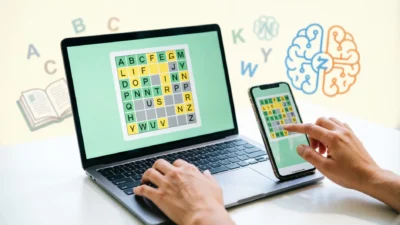
Definition: Wordle is a daily word puzzle game where players guess a five-letter word in six attempts. Color-coded tiles show correct letters in the right spot (green), correct letters in the wrong spot (yellow), and incorrect letters (gray). Wordle gameplay combines logic, deduction, and vocabulary skills for fun and mental exercise.
Wordle has become one of the most popular puzzle games worldwide, with millions playing Wordle online or via mobile apps daily. The game challenges players to guess a five letter word in six attempts, using color-coded feedback to guide their next guesses.
Green tiles indicate letters in the correct position, yellow tiles show letters that exist in the word but are in the wrong spot, and gray tiles mark incorrect letters.
Mastering Wordle gameplay involves strategy, pattern recognition, and logical thinking. Players can improve their chances of winning by choosing strong starting words, prioritizing vowels, and eliminating incorrect letters. Beyond fun, Wordle develops cognitive skills, enhances vocabulary, and promotes problem solving abilities.
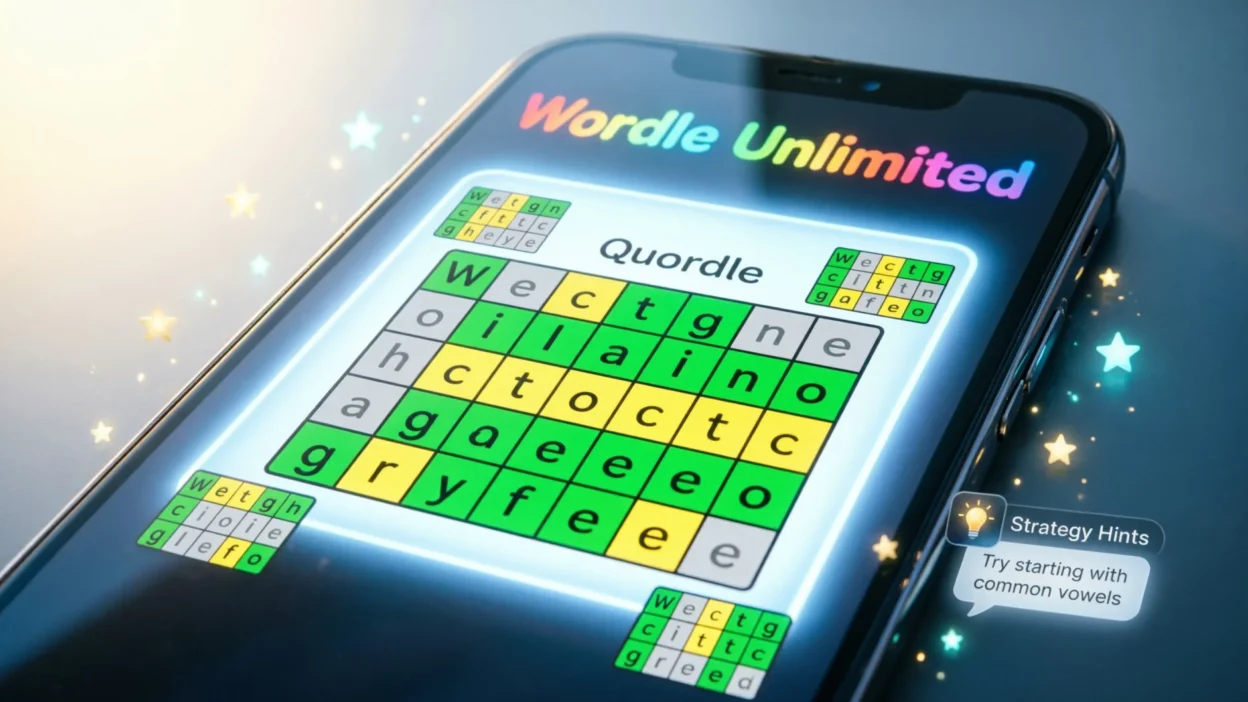
With variants like Quordle, Wordle Unlimited, and related games such as Spelling Bee, Wordle has evolved into an engaging, educational daily habit.
If a beginner or advanced player, understanding the mechanics, strategies, and benefits ensures a rewarding Wordle experience every day.
What is Wordle Gameplay?
Wordle gameplay is a daily puzzle where players guess a five-letter word using six attempts. Feedback is provided using color codes green, yellow, and gray tiles to guide the player’s next guess.
- Daily Puzzle Challenge: Each day presents a new word, offering a shared experience for players.
- Six Attempts to Solve: Limited guesses encourage strategic thinking.
- Color-Coded Feedback:
- Green: Correct letter in the correct position.
- Yellow: Correct letter in the wrong position.
- Gray: Letter not in the word.
- Green: Correct letter in the correct position.
- Logical Deduction: Eliminating impossible words enhances strategy.
- Vocabulary Skills: Knowledge of five-letter words is crucial.
- Minimalist Interface: Keeps focus on gameplay without distractions.
- Social Interaction: Players share results, streaks, and strategies.
Example: If your first guess is CRANE and R and A turn yellow, while E turns green, you know R and A are in the word but misplaced, and E is in the correct position.
Wordle’s simplicity and focus on logic make it engaging and rewarding.
How to Play Wordle
- Choose a Starting Word: Words like SLATE, AUDIO, TRACE help cover common letters and vowels.
- Make Your First Guess: Submit your word and analyze the color-coded feedback.
- Analyze Feedback:
- Green: Correct and in place.
- Yellow: Correct but in wrong position.
- Gray: Not in the word.
- Green: Correct and in place.
- Adjust Subsequent Guesses: Incorporate feedback to narrow possibilities.
- Prioritize Vowels: Discover vowels early to improve your chances.
- Eliminate Letters: Avoid gray letters in future guesses.
- Narrow Word Choices: Focus on common patterns and letter combinations.
- Finalize Guesses: Use logic to solve by the 6th attempt.
Example:
- First Guess: AUDIO → reveals vowels.
- Second Guess: TRACE → identifies positions for T and R.
- Final Guess: GRATE → solves the word using deduction.
This step-by-step approach improves Wordle gameplay, whether online, downloaded, or free.
Wordle Strategies and Tips
- Start with words covering multiple vowels and common consonants.
- Prioritize frequently used letters (E, A, R, O, T).
- Track green and yellow tiles for accurate deduction.
- Avoid repeating gray letters.
- Use common prefixes/suffixes (-ER, -ED, -ING).
- Save rare letters (Q, X, Z) for later guesses.
- Develop a personal starter word list.
- Analyze past guesses to refine strategy.
- Practice daily, including Wordle Unlimited or Quordle.
- Maintain mental clarity and focus.
Example:
- First Guess: AUDIO → vowels found.
- Second Guess: TRACE → identifies T and R placement.
- Third Guess: GRATE → solution found efficiently.
These strategies turn Wordle gameplay from guessing to logical deduction.
Common Mistakes in Wordle Gameplay
- Ignoring color-coded feedback.
- Repeating gray letters.
- Poor starter words with rare letters.
- Skipping vowels early.
- Random guessing instead of deduction.
- Misplacing yellow tiles.
- Rushing guesses.
- Ignoring common word patterns.
- Using the same starter word daily.
- Overcomplicating simple words.
Example:
- First Guess: QUIRK → Q/K gray, U yellow.
- Second Guess: QUICK → Q/K repeated, wasting attempt.
Correct strategy avoids repeating gray letters.
Benefits of Playing Wordle
- Enhances vocabulary and spelling.
- Boosts logical thinking and problem-solving skills.
- Improves pattern recognition and memory.
- Provides daily mental stimulation.
- Encourages strategic thinking.
- Fosters social competition via streaks.
- Develops focus, attention, and cognitive flexibility.
- Suitable for all ages and non-native speakers.
- Reinforces learning from mistakes.
Example: Daily play improves spelling, logical deduction, and mental agility over time.
Wordle Variants and Similar Games
Popular Wordle Variants:
- Quordle: Four words simultaneously.
- Dordle: Two words at once.
- Absurdle: Adversarial Wordle.
- Wordle Unlimited: Unlimited puzzles.
- Spelling Bee: NY Times vocabulary game.
Similar Games: Hangman, Wordscapes, Jumble, Letterpress, Typeshift.
Variants like Quordle or Wordle Unlimited challenge deduction skills and enhance daily Wordle gameplay.
Wordle Gameplay Psychology
- Instant feedback triggers dopamine via green tiles.
- Daily puzzle anticipation builds habit formation.
- Solving puzzles creates a sense of achievement.
- Sharing results encourages social competition.
- Mental engagement fosters “flow state” and cognitive stimulation.
- Balanced difficulty keeps players motivated without frustration.
Example: Guessing CRANE first and analyzing tiles engages logic and pattern recognition.
Tools and Resources to Improve Wordle Skills
- Vocabulary apps and word lists.
- Online Wordle solvers for hints.
- Community forums and Reddit groups.
- Wordle clone apps like Wordle Unlimited.
- Strategy guides, letter frequency charts, and practice tools.
- Tracking streaks and performance stats.
These resources enhance Wordle gameplay free, downloaded, or online.
FAQs
- What is Wordle gameplay? Guess five-letter words with color-coded feedback.
- How to improve? Use strong starter words, analyze feedback, and eliminate letters.
- Offline play? Yes, via Wordle gameplay download or apps.
- Daily challenges? One classic puzzle daily; Wordle Unlimited offers more.
- Common mistakes? Repeating gray letters, ignoring feedback, skipping vowels.
- Best starter words? CRANE, SLATE, AUDIO, TRACE, REACT.
- Wordle suitable for kids? Yes, enhances spelling and logic.
Tips for Mastering Wordle Streaks
- Plan strong first guesses.
- Track letters carefully.
- Prioritize common patterns.
- Avoid rare letters early.
- Take time analyzing feedback.
- Rotate starter words.
- Practice variants like Quordle.
- Learn from mistakes.
- Stay focused and calm.
- Celebrate wins.
Consistent practice improves performance and maintains Wordle today streaks.
Conclusion
Wordle is a daily exercise in logic, vocabulary, and strategy.
By mastering Wordle gameplay, using strong starter words, analyzing feedback, and practicing consistently (including variants like Quordle or Wordle Unlimited), players improve deduction, memory, and problem solving skills.
Wordle also provides daily mental stimulation, social interaction, and a sense of accomplishment, making it an educational and entertaining puzzle for players of all ages.